
10 Unique Mug Styles for Tea Lovers: 2026 Picks
Table of Contents
- Why the Right Mug Style Changes Your Tea Experience
- 1. Classic Ceramic Mug: The Everyday Workhorse
- 2. Porcelain and Bone China: Elegance That Retains Heat
- 3. Stoneware: Rustic Durability for Daily Tea
- 4. Double-Walled Glass: Watching Your Tea Steep
- 5. Infuser Mugs: Built for Loose Leaf Tea
- 6. Wide-Rimmed Mugs: Letting the Aroma Breathe
- 7. Hand-Thrown and Artisan Mugs: One-of-a-Kind Character
- 8. Zodiac and Personalized Mugs: Gifts With Meaning
- 9. Minimalist and Botanical Print Mugs: Quiet Design for Daily Use
- 10. Novelty Design Mugs: Personality on the Shelf
- How to Clean Ceramic Mugs Without Damaging the Print
- Best Ceramic Mugs for Daily Tea: What to Look For
- Personalized Tea Mugs for Gifts: Choosing the Right One
- Frequently Asked Questions
Last Updated: September 15, 2026
Why the Right Mug Style Changes Your Tea Experience
The mug you choose does more than hold liquid. Material, wall thickness, and rim shape all influence how quickly tea cools, how much aroma reaches your nose, and how the tannins register on your palate. This guide from Midland Mugs breaks down 10 unique mug styles for tea lovers, from classic ceramic to hand-thrown stoneware, so you can match the vessel to the brew.
Tea drinkers who switch from thin-walled cups to properly insulated mugs often notice the difference immediately: the tea stays hot longer, the aroma concentrates instead of dissipating, and bitter notes from over-extracted tannins soften. The Tea Association of the USA guide to brewing notes that water temperature and steep time drive flavor, but the vessel determines how long that flavor holds.
Below, we'll cover ten mug styles, what each does well, where each falls short, and who each one suits.
1. Classic Ceramic Mug: The Everyday Workhorse
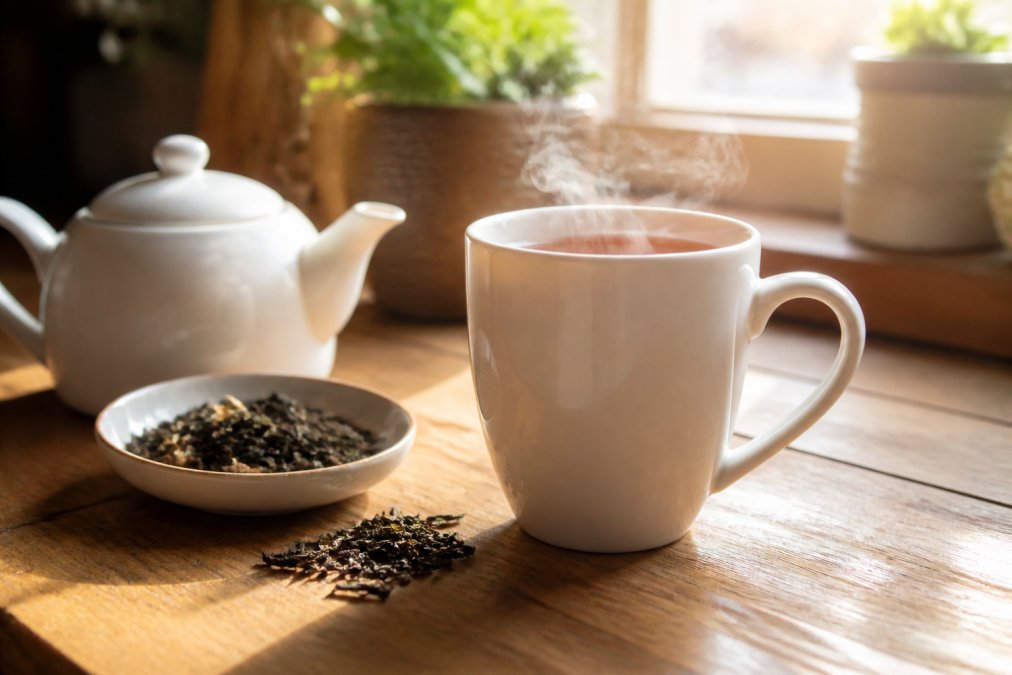
Classic ceramic is the default for good reason. It holds heat well, feels substantial in the hand, and takes a glaze that resists staining from repeated steeping. For daily tea drinkers, a ceramic mug is the most practical starting point.
But the interesting part is what happens below the glaze. Ceramic is fired clay, and depending on the firing temperature and glaze coverage, the body remains slightly porous. That porosity matters for tea because tannins, the polyphenols responsible for astringency and bitterness, are large molecules that interact with surfaces. A fully vitrified, high-fired ceramic with a smooth glaze gives tannins nowhere to cling, so the tea tastes cleaner and more consistent from first sip to last. A lower-fired, more porous ceramic can absorb some of those compounds into the body over time, which is why an old, unglazed or crazed mug sometimes develops a faint “seasoned” character. Most practitioners find this effect is subtle in glazed mugs but noticeable in rustic, unglazed stoneware or raku.
The practical takeaway: if you drink delicate greens or whites and want their flavor to stay true, choose a glossy, fully glazed ceramic. If you drink robust blacks, puerh, or chai and don’t mind a little character building up, a slightly porous or matte-glazed ceramic can be part of the charm.
The trade-off is weight. Thick ceramic retains heat but adds bulk, and cheap ceramic can chip at the rim over time. Wall thickness also changes how the rim feels: a thick rim cools more slowly against your lip, which can make a hot tea feel less hot than it is, while a thin rim delivers a sharper temperature sensation.
Pros and Cons of Ceramic
| Pros | Cons |
|---|---|
| Excellent heat retention | Heavier than glass or porcelain |
| Durable glaze resists staining | Can chip if dropped |
| Wide design range | Thick walls cool the rim slower |
| Glazed surface limits tannin absorption | Porous or crazed glazes can season over time |
2. Porcelain and Bone China: Elegance That Retains Heat
Porcelain and bone china are fired at higher temperatures than standard ceramic, producing thinner walls that still hold heat efficiently. Bone china adds ash to the clay body, which gives it a translucent quality and a lighter feel.
This is the style to choose if you want a mug that looks refined on a shelf but performs like a workhorse. The main drawback is fragility: thin walls chip more easily, and bone china typically costs more than everyday ceramic.
3. Stoneware: Rustic Durability for Daily Tea
Stoneware is fired at high temperatures and often left with a textured, matte glaze. It is the most durable of the clay-based options, resistant to thermal shock and everyday knocks.
Where stoneware falls short is weight and heat transfer. The thick walls hold temperature well but feel heavy, and the textured surface can be harder to clean if tea stains settle into unglazed areas. Hand-washing extends the life of matte finishes.
4. Double-Walled Glass: Watching Your Tea Steep
Double-walled glass uses two layers with a vacuum or air gap between them. That gap insulates the tea while keeping the outer wall cool to the touch, which matters if you brew at high temperatures.
The clear walls let you watch the color develop as the tea steeps, which is genuinely useful for judging strength without tasting. The catch: glass is the most fragile option on this list, and the outer wall can fog if moisture gets between the layers.
5. Infuser Mugs: Built for Loose Leaf Tea
An infuser mug has a built-in basket or strainer, so you can brew loose leaf tea directly in the cup and lift the leaves out when the steep time is up. For anyone drinking loose leaf regularly, this removes the need for a separate teapot.
Look for a stainless steel basket with fine perforations. Coarse holes let leaf fragments through, and plastic baskets can retain flavors from previous brews.
6. Wide-Rimmed Mugs: Letting the Aroma Breathe
A wide rim increases the surface area where tea meets air, releasing more aroma as you drink. If you care about the smell of a tea as much as the taste, a wide-rimmed mug delivers more of it. But the mechanism is worth understanding: aroma compounds are volatile, and they escape faster when the liquid surface is broad and the distance from liquid to nose is short. That’s why a wide, shallow cup often smells more intense than a tall, narrow one holding the same tea.
The downside is heat loss. More surface area means faster cooling, so wide-rimmed mugs suit teas you drink quickly rather than those you nurse for an hour. As a rule of thumb, a wide mug can lose heat two to three times faster than a narrow one of the same volume, depending on wall thickness and material (Physiology, Heat Loss).
Where this gets interesting is pairing mug shape with brewing method.
7. Hand-Thrown and Artisan Mugs: One-of-a-Kind Character
8. Zodiac and Personalized Mugs: Gifts With Meaning
9. Minimalist and Botanical Print Mugs: Quiet Design for Daily Use
10. Novelty Design Mugs: Personality on the Shelf
How to Clean Ceramic Mugs Without Damaging the Print
Best Ceramic Mugs for Daily Tea: What to Look For
Personalized Tea Mugs for Gifts: Choosing the Right One
Frequently Asked Questions
What material is best for tea mugs?
Ceramic and porcelain are the most popular choices for tea because they retain heat well and do not react with the tea. Stoneware offers durability for daily use, while double-walled glass lets you watch the tea steep and keeps it warm without burning your hands. For loose leaf tea, an infuser mug made from ceramic or glass is ideal. Avoid unglazed earthenware, which can absorb flavors over time.
Does the shape of a mug affect the taste of tea?
Yes, the shape influences aroma and temperature. Wide-rimmed mugs release more steam, so you smell the tea's aroma before you sip, which enhances the flavor experience. Tall, narrow mugs keep tea hotter for longer but concentrate the aroma. For delicate teas like white or green, a wider rim helps prevent bitterness by cooling the liquid slightly as it reaches your lips.
How do I choose the perfect mug for loose leaf tea?
Look for a mug with a built-in infuser or enough width to hold a tea ball. Ceramic infuser mugs are a practical choice because they retain heat and are easy to clean. Consider capacity: 11oz works well for a standard cup, while 15oz suits those who like a larger serving. Also check that the infuser is removable and dishwasher safe for easy cleanup.
Are ceramic mugs better than glass for tea?
Both have advantages. Ceramic mugs retain heat longer and come in many designs, including personalized tea mugs for gifts. Glass mugs, especially double-walled versions, let you see the tea's color and are lightweight. Ceramic is more durable for daily use and less prone to thermal shock if preheated. For a classic tea experience, ceramic is often preferred.
How to maintain the quality of custom-printed ceramic mugs?
Wash ceramic mugs by hand with warm water and mild dish soap when possible. If using a dishwasher, place them on the top rack and avoid high-heat drying cycles. Do not use abrasive sponges or scouring pads on the printed area. For how to clean ceramic mugs with stubborn tea stains, a paste of baking soda and water works gently without harming the glaze or print.
Finding a mug that suits both the tea and the drinker takes a little thought, but the payoff is a daily ritual that feels considered rather than accidental. Midland Mugs makes that choice easier with premium ceramic construction, custom printing options, and a vibrant design collection, all backed by fast shipping and secure packaging so gifts arrive intact. Browse the zodiac range, pick a design that fits, and get started with Midland Mugs today.