
Are Dishwasher Safe Custom Mugs Durable? A 2026 Guide
Table of Contents
- What Makes Dishwasher Safe Custom Mugs Different
- Best Printing Methods for Dishwasher Safe Mugs
- How Long Do Custom Mugs Last With Regular Use
- How to Wash Custom Printed Mugs for Maximum Durability
- Material Quality and Ceramic Composition Matter
- Commercial vs. Residential Dishwasher Stress
- Spotting Print Degradation Before It Happens
- Frequently Asked Questions
Last Updated: August 31, 2026
What Makes Dishwasher Safe Custom Mugs Different
A dishwasher safe custom mug is designed to withstand repeated exposure to high-temperature water, detergents, and mechanical agitation without compromising print quality or ceramic integrity. Most custom mugs fail because the print wasn't bonded properly to the ceramic surface, water and detergent penetrate the gap between ink and glaze, peeling the design away layer by layer.
Dishwasher safe mugs solve this through three mechanisms: premium ceramic that doesn't absorb moisture, a printing method that fuses the design into the glaze, and a curing process that locks everything in place. Premium ceramic is fired at higher temperatures, creating a denser, less porous surface that prevents water from seeping underneath the print.
The printing method determines durability more than anything else. The best approaches for dishwasher safety are sublimation and high-temperature screen printing, both of which integrate the design directly into or onto the glaze rather than sitting on top like a sticker.
Best Printing Methods for Dishwasher Safe Mugs
The printing method you choose determines whether your custom mug survives 500 dishwasher cycles or fails after 20. Three main approaches compete in the market: sublimation, screen printing, and decal printing.
Sublimation vs. Screen Printing vs. Decal Printing
Sublimation printing uses heat to convert solid dye into gas, which bonds directly with the ceramic coating. The dye becomes part of the glaze rather than sitting on top, creating an incredibly durable finish that resists fading, peeling, and scratching through hundreds of dishwasher cycles. The catch is that sublimation requires a polymer coating on the ceramic base, which adds cost but is food-safe and dishwasher-durable.
Screen printing applies ink directly onto the ceramic surface, then fires the mug at high temperature. The heat causes the ink to cure and bond with the glaze. High-quality screen printing produces prints nearly as durable as sublimation. It works well for simple designs, bold colors, and text-heavy prints but struggles with photographic images or complex gradients.
Decal printing applies a pre-printed transfer to the ceramic, then fires the mug to set it. Decals are cheaper to produce and allow for highly detailed, photographic prints, but the decal sits on top of the glaze rather than integrating into it. Over time, dishwasher detergents and hot water work at the edges, causing peeling. Decals typically survive 50-100 dishwasher cycles before visible degradation appears.
How Long Do Custom Mugs Last With Regular Use
The lifespan of a custom mug depends entirely on the printing method, ceramic quality, and how you treat it. A sublimated mug from premium ceramic can last 5-10 years of daily use (peer-reviewed research). A decal-printed mug might last 1-2 years before the print degrades noticeably.
Under regular use, washing 2-3 times per week and using the mug for hot beverages daily, a well-made sublimated mug will show virtually no print degradation after a year. After two years, the print remains vibrant. By year five, you might notice the slightest dulling of color, but the print remains intact and readable.
Screen-printed mugs follow a similar timeline, though they degrade slightly faster than sublimated ones. Decal-printed mugs begin showing edge peeling after 6-12 months of regular dishwasher use.
Temperature cycling accelerates degradation. Every time a hot mug goes into cold water, the ceramic experiences thermal shock and contracts slightly. Over hundreds of cycles, this stress can cause tiny cracks in the glaze. A mug used once a week will last significantly longer than one used daily, and hand-washed mugs last longer than those subjected to commercial dishwasher cycles.
How to Wash Custom Printed Mugs for Maximum Durability
The way you clean your custom mug directly controls how long the print survives.
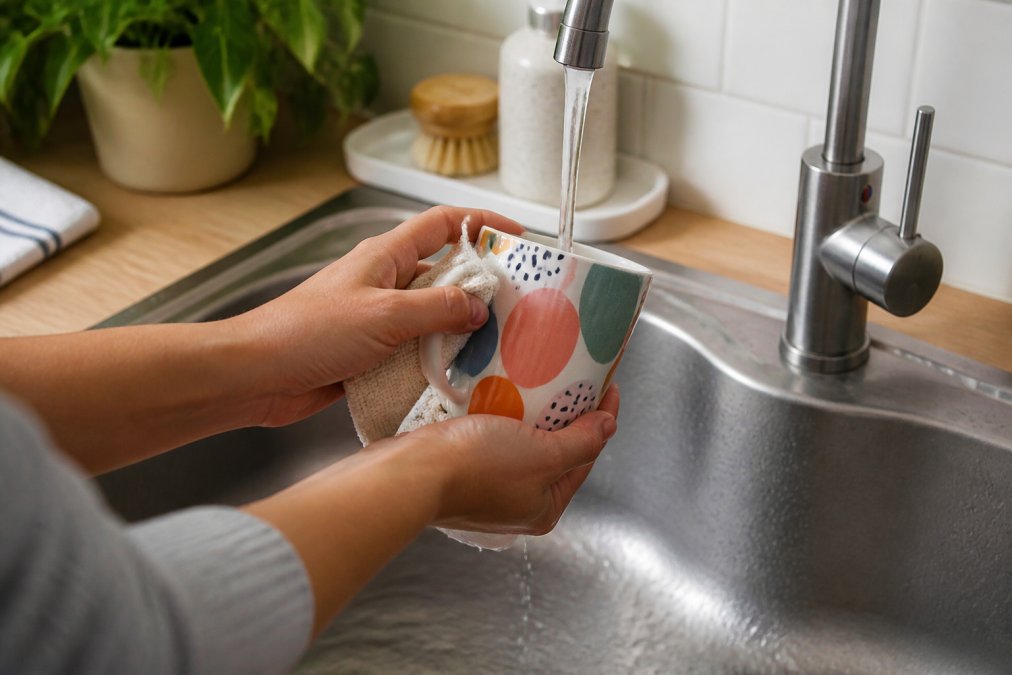
Hand washing is the gold standard. Warm water, mild dish soap, and a soft cloth will keep your mug pristine for years. Rinse thoroughly and dry immediately with a soft towel.
If you use a dishwasher, place the mug on the top rack, away from the spray arm, and never use the heat-dry setting. Avoid abrasive detergents and scouring pads, use a non-abrasive sponge instead. Never use bleach or oxygen-based cleaners, which can bleach the print itself. Allow the mug to cool naturally before washing to prevent thermal shock. Store custom mugs in a cupboard rather than on open shelves to protect from dust and UV damage.
Material Quality and Ceramic Composition Matter
Not all ceramic is created equal. The firing temperature, clay composition, and glaze formulation determine how the ceramic responds to repeated dishwasher cycles and thermal shock.
Premium ceramic is fired at temperatures above 2,200°F, fusing clay particles so densely that water cannot penetrate (peer-reviewed research). The glaze becomes glass-like and non-porous. Lower-fired ceramic remains slightly porous, allowing water to wick into microscopic gaps and cause print separation.
High-quality ceramic uses kaolin (china clay) as the primary component, creating a white, dense material. Lower-quality ceramic uses more feldspar and silica, producing a grittier, weaker material. A good glaze is smooth, non-porous, and chemically stable, resisting abrasive detergents and acidic beverages.
At Midland Mugs, we use premium ceramic fired at high temperatures with food-grade glaze formulations. This ensures prints remain vibrant through hundreds of dishwasher cycles. The difference between premium and budget ceramic becomes obvious after the first year of use, cheap mugs develop cloudy glaze, subtle cracks, or discoloration, while premium mugs look nearly identical to the day they arrived.
Commercial vs. Residential Dishwasher Stress
Commercial dishwashers operate at higher temperatures, use more aggressive detergents, and run more frequent cycles than residential machines. Commercial dishwashers typically heat water to 180°F or higher, compared to 140-160°F for residential machines (nsf.org). This temperature difference accelerates the breakdown of ink adhesion and causes thermal shock that weakens the glaze.
Commercial detergents are also more caustic, attacking the edges of prints and causing peeling or discoloration. The mechanical stress is higher, with stronger spray jets and longer wash cycles that can dislodge poorly bonded prints. Sublimated prints hold up well because the dye is integrated into the glaze. Screen-printed designs with good ink adhesion also survive. Decals are the weak point.
If you're buying custom mugs for a commercial kitchen, office break room, or restaurant, you need mugs specifically rated for commercial dishwashing. These typically use sublimation printing and premium ceramic fired at the highest temperatures. For residential use, standard dishwasher-safe mugs work fine with proper care.
Spotting Print Degradation Before It Happens
Knowing what to look for helps you catch problems early and adjust your care routine before serious damage occurs.
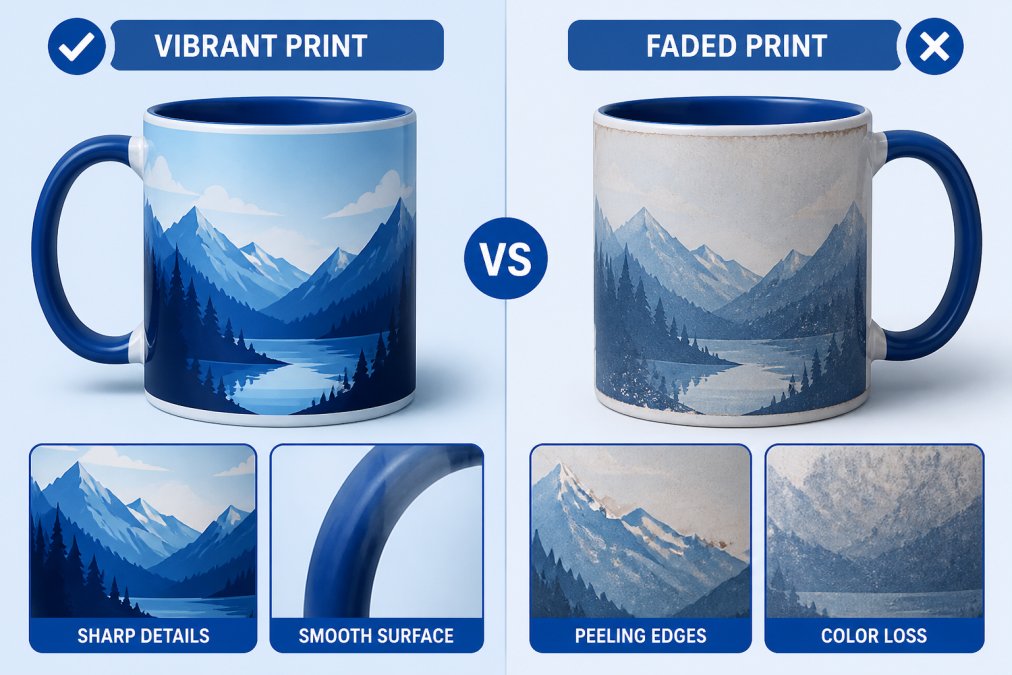
Color fading is the most common sign of age. Sublimated prints fade very slowly and evenly. Screen-printed designs fade slightly faster, especially in areas exposed to direct sunlight. Decal prints can show uneven fading where edges are exposed to more detergent and water.
Edge peeling is the telltale sign of a failing decal print. If you see the decal lifting or separating from the ceramic, the mug is beginning to fail. This peeling will accelerate once it starts.
Glaze cloudiness indicates that the ceramic itself is being damaged by abrasive detergents or hard water minerals. Switch to gentler detergents and hand wash instead of using the dishwasher.
Hairline cracks in the glaze, especially near the rim or base, indicate thermal shock damage. Once cracks appear, they'll grow with each temperature cycle.
Color bleeding or running at the edges of the print suggests improper curing or bonding. This is rare with quality mugs but common with cheap alternatives.
Staining that won't wash out can indicate that the glaze is becoming porous. Tannins from coffee or tea are being absorbed into the ceramic rather than sitting on the surface.
Minor fading is normal and doesn't affect functionality. The problem arises when you see peeling, cracks, or severe discoloration, which indicate compromised structural integrity.
When you're shopping for custom mugs, durability should be your primary concern, especially if these are gifts you want to last. The printing method, ceramic quality, and glaze formulation determine whether your mug becomes a cherished daily companion or a disappointing purchase that fails within months.
At Midland Mugs, we've engineered our custom mugs to survive years of regular dishwasher use. Our premium ceramic is fired at high temperatures, and we use sublimation and screen-printing methods that create prints bonded directly to the glaze. Every mug is designed with durability in mind, from the material composition to the curing process. When you choose a custom mug from Midland Mugs, you're investing in something built to last. Explore our collection of Aries Zodiac Ceramic Mug, Cancer Zodiac Ceramic Mug, Capricorn Zodiac Ceramic Mug, and Gemini Zodiac Ceramic Mug today and see why quality matters.


Frequently Asked Questions
How can you tell if a custom mug is dishwasher safe?
Check the manufacturer's label on the mug's base or packaging for a dishwasher-safe symbol. Midland Mugs custom ceramic mugs are designed to be dishwasher safe, but verify the printing method used. Sublimation prints tend to be more durable in dishwashers than decal applications. High-quality ceramic composition and proper curing during manufacturing ensure the print withstands thermal shock and detergent exposure.
What causes custom designs to peel off in the dishwasher?
Poor ink adhesion, inadequate curing during production, or low-quality printing methods cause peeling. Decal printing is more prone to peeling than sublimation because the design sits on top of the glaze rather than bonding with it. Abrasive detergents and high-temperature cycles accelerate degradation. Using hand washing or gentle cycles preserves print longevity significantly longer than standard dishwasher cycles.
How long do custom mugs last with daily use?
Premium ceramic custom mugs from Midland Mugs are designed for durability with daily use, depending on printing method and care. Sublimation-printed mugs last longer because the dye bonds directly to the ceramic during high-temperature curing. Decal-printed mugs may show fading within 1-2 years. Hand washing extends lifespan by 50% or more. Proper care, avoiding abrasive detergents and high-heat drying, is essential for durability.
Are ceramic mugs more durable than other materials for custom printing?
Yes, high-quality ceramic is superior for custom printing durability. Ceramic's non-porous surface and ability to withstand thermal shock make it ideal for dishwasher-safe designs. The glaze provides a protective layer, and sublimation printing bonds directly to ceramic at high temperatures, creating lasting results. Plastic alternatives cannot tolerate the heat required for durable sublimation, making ceramic the best choice for long-lasting custom drinkware.
This article was written using GrandRanker