
Best Ceramic Mugs for Daily Coffee: 2026 Guide
Table of Contents
- How We Chose the Best Ceramic Mugs for Daily Coffee
- Quick Comparison: Top Ceramic Mugs at a Glance
-
Our Top Picks: Best Ceramic Mugs for Daily Coffee
- 1. Midland Mugs: Best for Custom Prints and Gifting
- 2. Le Creuset Stoneware Mug: Best for Heat Retention
- 3. Denby Elements Mug: Best for Chip Resistance
- 4. Year & Day The Mug: Best for Slow Coffee Drinkers
- 5. Fable The Mug: Best Sustainable Option
- 6. Heath Ceramics Stack Mug: Best Mid-Century Design
- 7. Hasami Porcelain Mug: Best Minimalist Japanese Craft
- 8. Fellow Joey Mug: Best Double-Wall Insulation
- Best Mug Size for Daily Coffee: Capacity Explained
- Ceramic vs Stainless Steel Coffee Mugs: Which Wins?
- How to Clean Ceramic Mugs and Prevent Staining
- Which Ceramic Mug Should You Choose?
- Conclusion
Last Updated: August 16, 2026
Choosing the right mug matters more than most coffee drinkers admit. The ceramic mugs you reach for every morning affect how long your coffee stays hot, how comfortable the handle feels, and even how the coffee tastes. At Midland Mugs, we've evaluated what separates a genuinely great daily driver from a mediocre one. This guide covers everything from material science to mug shape, so you can make a confident choice.
How We Chose the Best Ceramic Mugs for Daily Coffee
Picking the best ceramic mugs for daily coffee comes down to five criteria: thermal retention, durability, ergonomics, material quality, and practical usability. Our selection process weighted thermal retention, material and glaze quality, ergonomics, chip resistance, and microwave and dishwasher safety. We also considered environmental footprint and how mug shape influences your sensory experience of the coffee itself.
Quick Comparison: Top Ceramic Mugs at a Glance
| Mug | Best For | Capacity | Dishwasher Safe | Starting Price |
|---|---|---|---|---|
| Midland Mugs | Custom prints and gifting | Standard | Yes | Visit site for pricing |
| Le Creuset Stoneware | Heat retention | Standard | Yes | ~$22-30 per mug |
| Denby Elements | Chip resistance | Standard | Yes | ~$15-20 per mug |
| Year & Day The Mug | Slow coffee drinkers | 12 oz | Yes | $17 per mug |
| Fable The Mug | Sustainable everyday use | 16 oz | Yes | $68 for 4 |
| Heath Ceramics Stack | Mid-century design | Standard | Yes | $30 per mug |
| Hasami Porcelain | Minimalist Japanese craft | 325-445ml | Yes | ~$28-38 per mug |
| Fellow Joey | Double-wall insulation | Espresso/cappuccino sizes | Check product | ~$25-30 per mug |
Prices for non-brand products sourced from product research data. Midland Mugs pricing depends on quantity and customisation. Visit midlandmugs.com for current pricing.
Our Top Picks: Best Ceramic Mugs for Daily Coffee
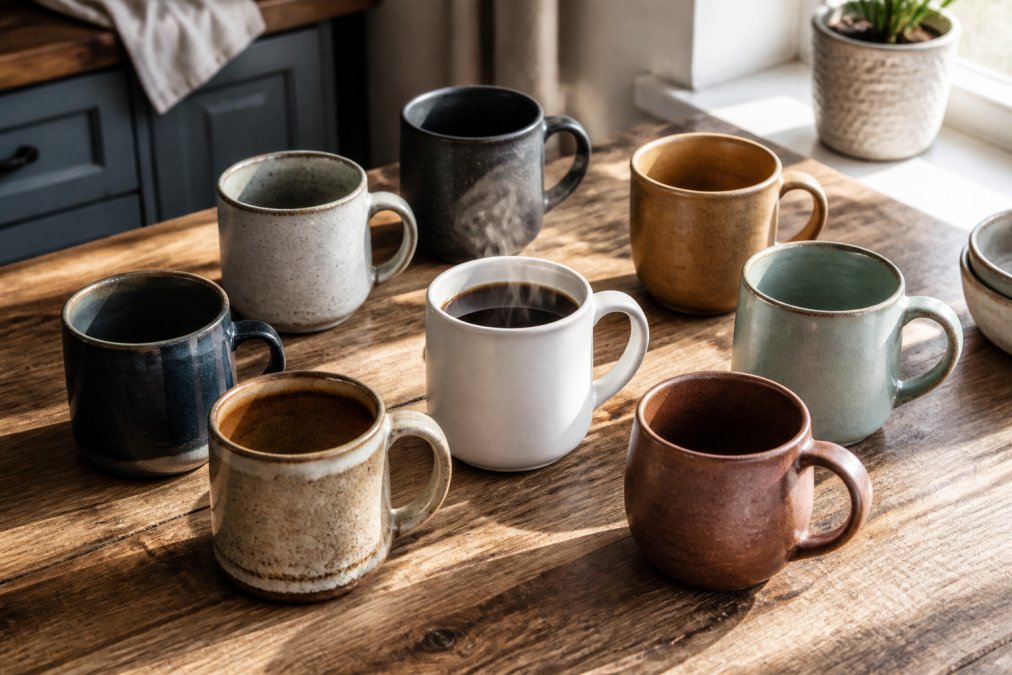
1. Midland Mugs: Best for Custom Prints and Gifting
Midland Mugs offers premium ceramic construction with vibrant, durable prints that hold up to daily use and repeated dishwasher cycles. Ordering is flexible, accommodating single personalised gifts or branded sets for teams. Fast shipping and secure packaging ensure mugs arrive intact.
Best for: Personalised gifts, office gifting, home decor enthusiasts.
Pros: Premium ceramic material with vibrant, lasting prints; custom design options; suitable for home and office use; fast shipping with secure packaging.
Cons: Pricing varies based on quantity and design.
2. Le Creuset Stoneware Mug: Best for Heat Retention
Few mugs hold heat as consistently as Le Creuset's stoneware. The thick walls and dense clay composition slow heat dissipation significantly, keeping your coffee at a comfortable drinking temperature longer than most ceramic alternatives. The scratch and stain-resistant enamel exterior is genuinely resilient and dishwasher, microwave, oven, freezer, and broiler safe. The signature color range suits almost any kitchen aesthetic.
Best for: Heat-retention-focused drinkers, those who want long-term durability.
Pros: Exceptional thermal retention, easy to clean, wide color range.
Cons: Higher cost than entry-level ceramic mugs.
3. Denby Elements Mug: Best for Chip Resistance
Chip resistance is underrated until a good mug becomes unusable after one drop. Denby's Elements range is handcrafted in Derbyshire, England from locally sourced clay. The expert glazing process produces a surface that genuinely withstands the knocks of daily kitchen life and comes with a 10-year guarantee, which other mugs may not match. Dishwasher, microwave, oven, and freezer safe.
Best for: Families, heavy daily users, anyone prone to dropping mugs.
Pros: Outstanding chip resistance, 10-year guarantee, versatile for hot beverages.
Cons: Interior may discolor slightly with extended use.
4. Year & Day The Mug: Best for Slow Coffee Drinkers
Thick walls and a tapered base make Year & Day's mug one of the better thermal performers among single-wall ceramic mugs. Made in Portugal from local earth and fired once to reduce emissions, the lead- and cadmium-free semi-matte glaze feels good against the lip. The four-finger ergonomic handle is genuinely comfortable, particularly for larger hands.
Best for: Slow drinkers, large-hand users, minimalist aesthetic preference.
Pros: Superior heat retention for a single-wall mug, comfortable handle, stain-resistant glaze.
Cons: Heavier than average; 12 oz may feel limiting for larger portions.
5. Fable The Mug: Best Sustainable Option
Fable's production approach stands out environmentally. The mugs are hand-finished in Portugal using locally sourced and recycled clays, then fired twice for durability. That double-firing increases chip resistance and extends the mug's lifespan, which is itself the most sustainable outcome. The 16-ounce capacity suits lattes or anyone who wants a larger morning pour. Dishwasher, microwave, and oven safe up to 450 degrees. The stackable design keeps cupboards tidy.
Best for: Environmentally conscious buyers, latte drinkers, families wanting durable sets.
Pros: Recycled clay production, excellent durability, generous capacity, stackable.
Cons: Size may be too large for espresso or standard drip coffee preferences.
6. Heath Ceramics Stack Mug: Best Mid-Century Design
Heath Ceramics has been making this mug in Sausalito, California since the 1960s. The unglazed rim and base give it an earthy, tactile quality that glazed-all-over mugs don't replicate. Stackability is built into the form, so a set of four stores efficiently. The mid-century aesthetic is distinctive enough to read as a design statement on any kitchen shelf.
Best for: Design collectors, mid-century modern interiors, buyers who value American craft heritage.
Pros: Timeless design, high-quality ceramic, stackable, handcrafted in the USA.
Cons: Unglazed sections may feel unusual; relatively expensive.
7. Hasami Porcelain Mug: Best Minimalist Japanese Craft
Hasami porcelain is made in Nagasaki prefecture using manufacturing methods developed over 400 years. The proprietary clay and crushed stone blend produces a natural texture immediately distinct from mass-produced porcelain mugs. The uniform cylindrical diameter makes every piece stackable with every other piece in the Hasami range. Available in multiple sizes from 325ml to 445ml, microwave and dishwasher safe.
Best for: Minimalist coffee rituals, Japanese craft enthusiasts, curated kitchen collections.
Pros: Authentic Japanese craft heritage, natural texture, excellent stackability, microwave safe.
Cons: Premium price; slight production variations may not suit those expecting uniformity.
8. Fellow Joey Mug: Best Double-Wall Insulation
The Fellow Joey takes a different approach to heat retention: double-wall ceramic construction. The inner wall holds the heat while the outer wall stays cool to the touch, keeping coffee hotter for longer while eliminating the need to put the mug down because it's too hot to hold. Available in espresso and cappuccino sizes, the Joey is designed with specialty coffee in mind. According to Fellow Products official product page, the double-wall construction is all ceramic, avoiding the metallic taste sometimes associated with stainless steel insulated cups.
Best for: Espresso drinkers, cappuccino lovers, anyone who wants maximum heat retention without a travel mug aesthetic.
Pros: Excellent insulation, cool exterior, specialty coffee-focused sizing.
Cons: Higher price than single-wall ceramic; smaller sizes may not suit those who prefer large pours.
Best Mug Size for Daily Coffee: Capacity Explained
The best mug size for daily coffee depends on your brewing method and how you take your coffee. Most standard drip coffee mugs hold between 10 and 12 fluid ounces. Specialty coffee drinkers working with espresso-based drinks need smaller volumes.
| Coffee Style | Recommended Capacity | Notes |
|---|---|---|
| Espresso | 2-3 oz | Cappuccino cup size; concentrates aroma |
| Cappuccino / Flat White | 5-6 oz | Latte mug range; preserves milk texture |
| Drip / Pour-over | 10-12 oz | Standard daily driver range |
| Large latte / Slow drinker | 14-16 oz | Allows for milk volume without overflow |
Mug shape affects the sensory experience of the coffee. A narrower opening concentrates aroma, which is why tasting cups used in professional coffee evaluation are typically small and tapered. A wide, open rim disperses aroma more quickly but allows the coffee to cool faster.
Ceramic vs Stainless Steel Coffee Mugs: Which Wins?
Ceramic mugs win for at-home daily use. Stainless steel wins for travel and portability.
Ceramic mugs don't impart any flavor to your coffee. The vitrified, kiln-fired surface is inert, meaning your coffee tastes exactly as it should, with no metallic notes. Stainless steel, particularly lower-quality options, can introduce a faint metallic taste, especially with acidic light-roast coffees. According to Specialty Coffee Association research on sensory evaluation, the vessel used during coffee consumption measurably affects perceived flavor and temperature experience.
Stainless steel insulated mugs retain heat far longer and survive drops that would shatter ceramic. For commuters or office workers who carry their coffee, stainless steel is the practical choice.
| Factor | Ceramic | Stainless Steel |
|---|---|---|
| Flavor neutrality | Excellent | Good to variable |
| Heat retention | Good (double-wall: very good) | Excellent |
| Durability | Moderate (chip risk) | High |
| Portability | Low | High |
| Aesthetics | High | Moderate |
| Dishwasher safe | Usually | Usually |
How to Clean Ceramic Mugs and Prevent Staining
Ceramic mugs stain over time because most ceramic surfaces are at least slightly porous. Even vitrified and glazed mugs develop micro-scratches through normal use, and coffee tannins settle into those scratches.
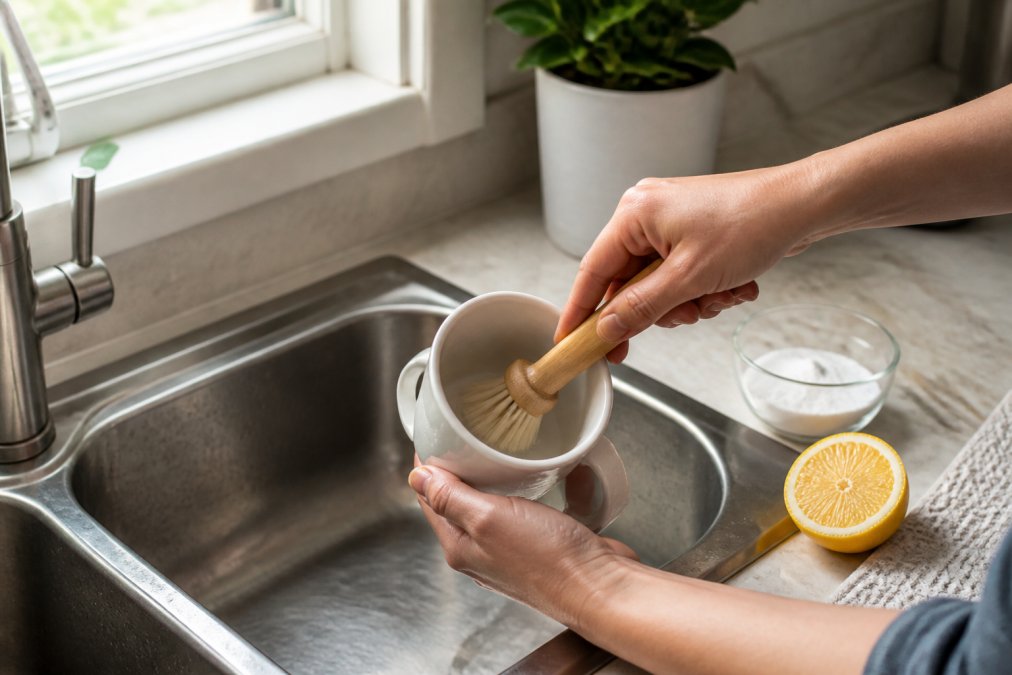
Daily habit: Rinse your mug with hot water immediately after use. This single step reduces staining more than any cleaning product.
Weekly clean: Sprinkle baking soda into the mug, add a small amount of water to form a paste, and scrub with a soft brush. Baking soda is mildly abrasive enough to lift tannin deposits without scratching the glaze.
For stubborn stains: Fill the mug with a solution of warm water and white vinegar (roughly equal parts), leave for 15-30 minutes, then scrub and rinse. Avoid harsh abrasive scourers, which damage the glaze and increase porosity over time. According to The Ceramic Arts Network on glaze porosity and care, unglazed or partially unglazed areas benefit from occasional treatment with a food-safe sealant.
Which Ceramic Mug Should You Choose?
The right ceramic mug comes down to what you actually prioritize.
Choose Midland Mugs if you want a premium ceramic mug with a personal touch: a custom design, a gift for someone specific, or branded mugs for your team.
Choose Le Creuset if heat retention is your primary concern and you want a mug that doubles as a kitchen aesthetic statement.
Choose Denby Elements if you want the most chip-resistant option on the market, backed by a 10-year guarantee.
Choose Year & Day if you're a slow coffee drinker who wants a minimalist mug with excellent thermal properties in a standard 12 oz size.
Choose Fable if environmental footprint matters to you and you want a generous 16 oz capacity for latte-style drinks.
Choose Heath Ceramics if mid-century design and American craft heritage are non-negotiable.
Choose Hasami Porcelain if you want Japanese craft tradition and a stackable minimalist system.
Choose Fellow Joey if you want the insulation benefits of double-wall construction in a ceramic mug, particularly for espresso or cappuccino.
| Priority | Best Pick |
|---|---|
| Custom / personalised | Midland Mugs |
| Heat retention | Le Creuset or Year & Day |
| Chip resistance | Denby Elements |
| Sustainability | Fable The Mug |
| Design / aesthetics | Heath Ceramics |
| Japanese craft | Hasami Porcelain |
| Insulation | Fellow Joey |
For most people buying a gift or upgrading their home coffee setup, the decision comes down to whether they want something personalised or something from a heritage craft brand. Mug accessibility is rarely discussed in buying guides, but it matters. Heavier mugs like Year & Day can be difficult for those with limited grip strength. The four-finger handle on Year & Day and the ergonomic handles on Le Creuset and Denby are more accommodating than narrow loop handles.
Frequently Asked Questions
Are ceramic mugs good for coffee?
Ceramic mugs are widely regarded as one of the best materials for coffee. They are non-porous when vitrified or glazed, so they do not absorb flavours or odours between uses. The thick walls of stoneware and porcelain mugs provide solid thermal retention, keeping your coffee warm for longer than thin glass. A lead-free, BPA-free glaze also means no unwanted compounds leach into your drink, making ceramic a healthy, sensory-friendly choice for daily coffee.
What is the best mug to keep coffee hot all day?
For maximum thermal retention in a ceramic mug, look for thick-walled stoneware or a double-wall ceramic construction like the Fellow Joey Mug. Thick walls slow heat dissipation significantly. If you need all-day heat, a vacuum-insulated stainless steel travel mug outperforms any single-wall ceramic. For home use where you drink within 20-30 minutes, a quality stoneware or porcelain mug with a tapered base and snug rim thickness is the most practical daily driver.
How do you choose a high-quality ceramic mug?
Check five things: material (vitrified stoneware or porcelain chips less than earthenware), glaze quality (lead-free, smooth, tannin-resistant finish), wall thickness (thicker walls improve insulation and durability), handle ergonomics (a four-finger grip reduces fatigue), and safety ratings (dishwasher safe and microwave safe markings matter for daily use). Weight distribution and base stability also affect how the mug feels in hand. Avoid mugs with hairline cracks in the glaze, which increase porosity and staining over time.
Which mug material is the healthiest for coffee?
Lead-free, cadmium-free glazed ceramic, specifically vitrified stoneware or porcelain, is the healthiest option for daily coffee. These materials are non-reactive and do not leach chemicals into hot beverages. Always confirm a mug is certified BPA-free and food-safe. Unglazed or raw ceramic interiors are more porous and can harbour bacteria over time, so a smooth, fully glazed interior is preferable for everyday hygiene. Glass is equally inert but retains less heat.
How do I remove coffee stains from a ceramic mug?
For everyday tannin staining, fill the mug with a solution of one tablespoon of bicarbonate of soda dissolved in hot water and leave it for 15-20 minutes, then scrub with a soft brush. White vinegar diluted with warm water works well for mineral deposits. Avoid abrasive scourers, which scratch the glaze finish and increase porosity over time, making future staining worse. For heavily stained mugs, a paste of bicarbonate of soda and a few drops of washing-up liquid applied directly to the stain is very effective.
Finding the best ceramic mugs for daily coffee is genuinely harder than it looks, because the right answer varies by how you drink, what you value, and who you're buying for. For a personalised gift or custom-branded office mug that holds up to daily use, Midland Mugs offers premium ceramic construction with custom printing, fast shipping, and secure packaging that protects your order in transit. Shop now at midlandmugs.com to see current designs and pricing, or start your own custom order.
This article was written using GrandRanker